Why the Same Weights Suddenly Feel Heavier in Perimenopause (and What Actually Helps)
A strength routine that felt manageable for years can suddenly feel noticeably harder with the same weights and same reps, and it’s not a sign of losing fitness — hormonal shifts during perimenopause change how effort gets perceived and how quickly the body recovers between sessions. This is general information, not medical advice.

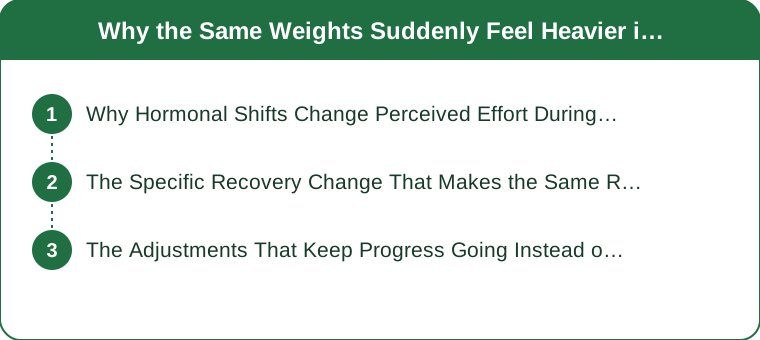
Why Hormonal Shifts Change Perceived Effort During Strength Training
The underlying mechanism: the estrogen-decline-affects-perceived-exertion (the same physical workload registering as subjectively harder as hormone levels shift — the perceived-effort-changes), the the-its-a-perception-shift-not-necessarily-a-strength-loss (the actual strength capacity often staying largely intact even as the same session feels considerably harder — the perception-not-capacity), the the-sleep-disruption-compounds-the-perceived-difficulty (the hormone-related sleep changes independently making any physical effort feel harder the next day — the sleep-disruption-adds-to-it), and the reframe (a workout feeling harder reflecting a genuine perception and recovery shift tied to hormonal changes, not evidence that fitness itself has declined)).

The Specific Recovery Change That Makes the Same Routine Feel Harder
What’s actually different: the recovery-between-sessions-takes-measurably-longer (the same rest period between strength sessions no longer being sufficient the way it used to be — the longer-recovery-needed), the the-joint-and-connective-tissue-changes-affect-load-tolerance (the tendons and joints responding differently to the same loading pattern during this hormonal transition — the connective-tissue-shift), the the-doing-the-identical-routine-without-adjusting-recovery-compounds-fatigue-over-weeks (the sticking to the exact same schedule without extra recovery time building cumulative fatigue rather than one hard session — the compounding-fatigue-without-adjustment), and the frame (recovery time itself changing being the concrete, physiological reason the identical routine now feels harder week over week).
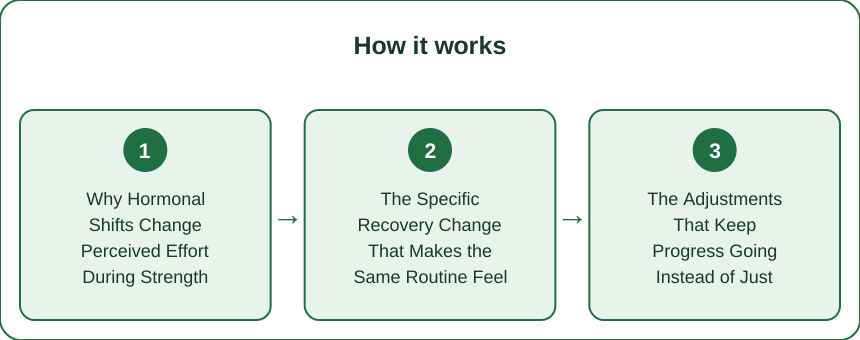
The Adjustments That Keep Progress Going Instead of Just Pushing Through
The practical changes: the add-one-extra-rest-day-between-heavy-sessions (the spacing hard strength sessions further apart to match the actual longer recovery need — the extra-rest-day-addition), the the-prioritize-sleep-and-protein-around-training-days (the supporting recovery directly through sleep and nutrition rather than only through the training plan itself — the support-recovery-directly), the the-track-effort-by-feel-not-only-by-fixed-numbers (the adjusting the day’s working weight based on how the session actually feels rather than rigidly hitting the same number every time — the train-by-feel-adjustment), and the frame (adding recovery time, supporting it directly through sleep and protein, and training by feel rather than fixed numbers — adjustments that work with the hormonal shift rather than against it).
The same strength weights and reps can start feeling noticeably harder during perimenopause because hormonal shifts change how physical effort gets perceived, even when actual strength capacity often stays largely intact, and independent sleep disruption from the same hormonal changes compounds how hard any effort feels the next day. The concrete physiological reason is that recovery between sessions genuinely takes longer during this transition, with joints and connective tissue responding differently to the same loading pattern, so sticking to an identical schedule without extra recovery time builds cumulative fatigue over weeks. Keep progress going by adding an extra rest day between heavy sessions, prioritizing sleep and protein directly around training days, and training by feel rather than rigidly hitting the same fixed numbers every session. This is general information, not medical advice.
Keep Reading
This article is for general informational and styling purposes only. Fit, sizing, and product availability may vary.